
Views: 0 Author: Site Editor Publish Time: 2026-11-15 Origin: Site
Scaling wire, cable, or textile manufacturing often hits a hard ceiling. Single-shaft winding systems create constant loading and unloading downtime. This bottleneck severely limits your daily output and frustrates production managers trying to meet tight deadlines. Multi-shaft spool winding machines mitigate this exact issue. They allow simultaneous winding and overlapping changeovers. You keep spindles turning while operators prep the next batch. This parallel processing transforms your factory floor dynamics, turning idle moments into active production time. We will break down the mechanical operation of multi-shaft systems. You will discover potential integration risks to watch out for before purchasing. Finally, we provide an evaluation framework for facility upgrades. By understanding these mechanics, you can make smarter equipment decisions. You will learn how to maximize throughput without compromising material quality.
Multi-shaft machines use turret indexing or parallel spindle synchronization to wind multiple spools simultaneously, effectively multiplying throughput without proportionally increasing floor space.
The most critical mechanical component to evaluate is the closed-loop tension control system, which prevents material stretching or snapping at high synchronous speeds.
Transitioning to a multi-shaft spool winding machine requires assessing operator technical capabilities and standardizing empty spool tolerances to prevent indexing jams.
ROI is primarily driven by reduced machine idle time during changeovers, not just maximum RPM.
A multi-shaft system relies on precise synchronization to function correctly. A single high-torque motor often drives multiple shafts simultaneously. Alternatively, modern designs use multiple servo motors linked via a Programmable Logic Controller (PLC). This electronic gearing ensures every spindle rotates at the exact same speed. Zero-backlash gearing is crucial here. It prevents micro-stutters during rapid acceleration. These minor stutters can cause uneven winding or induce material stress. Proper motor synchronization keeps tension uniform across all active channels.
Best Practice: Always verify motor torque curves before installation. Ensure the drive system can handle your heaviest spool payloads without overheating.
Common Mistake: Ignoring gear maintenance. Worn gears introduce backlash, ruining synchronization and causing loose material layers.
Traverse mechanisms map the wire back and forth across multiple spools. They move in exact unison. This synchronized movement ensures uniform layer winding across all active shafts. If one guide lags slightly, the entire batch suffers quality degradation. Manufacturers use precision ball screws to drive these guides effectively. This setup guarantees perfect pitch control for every spool. Belt-driven guides exist but often lack the rigidity needed for high-speed parallel winding. Ball screws offer superior repeatability over millions of cycles.
Turret indexing enables continuous factory operation. Industry experts often call this process "fly-winding." One set of shafts winds the material at full speed. Meanwhile, an operator or robotic arm unloads the secondary stationary shafts. The turret then rotates to swap the full spools for empty ones instantly. This mechanism allows true zero-downtime operation. You never stop the machine to load new cores. The spindles simply rotate into the active winding zone.
Reaching the target yardage triggers the auto-cut sequence. Pneumatic or motorized arms engage immediately. They cut the material and tuck the tail automatically. This secures the coil without manual taping steps. It keeps the continuous process moving swiftly. Consistent tail tucking also prevents tangles during downstream processing. When evaluating a Spool Winding Machine, check the auto-cut reliability. Blades must remain sharp, and pneumatic cylinders need consistent air pressure to function seamlessly.
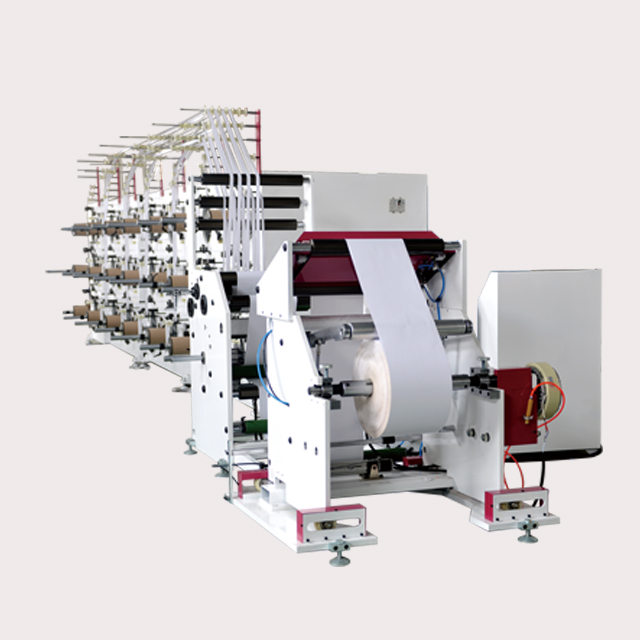
Table 1: Production Comparison Matrix
Operational Metric | Single-Shaft Systems | Multi-Shaft Systems |
|---|---|---|
Throughput Style | Sequential (One spool at a time) | Parallel (Multiple spools simultaneously) |
Labor Focus | Constant machine-tending | Periodic batch loading and QC |
Scrap Rate | Higher (Operator-dependent tension) | Lower (Automated synchronized tension) |
Changeover Downtime | High (Machine stops completely) | Near Zero (Overlapping tasks) |
Single shafts force sequential production workflows. You finish one spool, stop the motor, and start another. Multi-shafts deliver parallel output instead. A 4-spindle or 6-spindle setup multiplies your yield instantly. You produce four or six spools in the exact same cycle time. This parallel processing drastically increases daily volume. For example, a facility producing 1,000 spools daily can scale to 4,000 spools without adding floor shifts. You maximize output per square foot of factory space.
Multi-shaft systems fundamentally change how operators work. They shift tasks from constant machine-tending to periodic batch loading. Operators spend less time waiting for winding cycles to finish. They spend more time on vital quality control tasks. One person can manage multiple automated machines easily. This improves overall labor efficiency on the factory floor. It also reduces ergonomic strain. Workers perform fewer repetitive loading motions per hour, lowering the risk of fatigue-related injuries.
Operator-dependent single setups often produce inconsistent winding tension. This leads directly to discarded, poorly wound spools. Synchronized tensioning across multiple shafts solves this expensive problem. It reduces the rate of scrap significantly. Every spool matches the exact same quality standard. Better material yield directly improves your profit margins. Scrap costs compound rapidly over a fiscal year. Eliminating loose or stretched coils saves raw material costs and prevents customer returns.
Choosing the right Spool Winding Machine requires looking past the spindle count. You must evaluate the underlying control systems governing the mechanical hardware.
Consider this a strictly non-negotiable feature. Load cells feed real-time tension data back to the central machine. The system adjusts speed instantly to prevent material deformation. If tension spikes suddenly, the motor slows down automatically. This closed-loop feedback protects delicate wires, fiber optics, and fragile threads. It ensures tight, uniform coils every time. Open-loop systems simply guess the required torque. They cannot compensate for minor tangles in the raw material payoff source.
Fast product changeovers require highly intuitive software. Modern PLCs and Human-Machine Interfaces (HMIs) provide recipe-driven menus. You can save specific pitch, speed, and width parameters easily. Operators simply select a saved recipe from a touchscreen. This eliminates manual dial adjustments completely. It reduces setup errors and speeds up production shifts. A robust HMI also offers remote monitoring. Production managers can track live yield metrics from their office computers.
Switching to a different spool size takes valuable time. Evaluate how long it takes to swap shafts. Check the traverse guide adjustment process closely. Quick-change tooling uses toolless locking mechanisms. Operators use simple levers instead of wrenches. This keeps changeover times under ten minutes. Slow tooling swaps eat heavily into your daily production capacity. Always ask the manufacturer for a live demonstration of a complete tooling changeover.
Best Practice: Standardize your spool core sizes as much as possible. Fewer spool variations mean fewer physical tooling swaps.
Common Mistake: Buying complex machines without quick-release adapters. Operators will avoid changing product lines if the mechanical swap is too difficult.
Multi-shaft automation requires strict uniformity across components. You must control the physical dimensions of your empty spools. This is an often-overlooked reality in manufacturing. Warped or inconsistent spools will cause violent indexing crashes. The automated arms expect the spool flange in an exact, mathematical location. If a flange is two millimeters off, the auto-cut blade misses. Standardize your spool purchasing strictly to avoid these frustrating jams. Do not buy cheap, out-of-spec plastic cores.
Expect a noticeable learning curve during initial setup. Ramping up to full operational speed requires fine-tuning. You must adjust the acceleration and deceleration profiles carefully. Aggressive motor starts will break delicate materials instantly. Wire snapping halts all synchronized spindles simultaneously. Take time to calibrate these PID loops for each specific material type. Run slower trial batches first. Gradually increase the RPM limit as operators gain confidence in the tension settings.
Multi-shaft systems demand specific footprint requirements. They often need extra clearance for safe turret rotation. You must also implement strict preventative maintenance schedules. Complex turret bearings require regular, high-quality lubrication. Neglecting these massive bearings leads to catastrophic, costly downtime. Plan your floor layout carefully to allow easy maintenance access. Technicians need room to walk around the entire machine safely. Do not push the equipment tightly against a facility wall.
Before purchasing a Spool Winding Machine, use this framework to narrow down your technical requirements.
You must match the machine's torque to your specific material. Heavy gauge copper requires massive driving force and rigid frames. Fine textile threads need high speed and incredibly low, sensitive tension. Verify the shaft diameter supports your specific spool cores perfectly. Mismatched payloads lead to premature motor burnout or loose winding layers. Provide the equipment manufacturer with physical samples of your raw material. Ask them to test the payload limits before confirming the design.
Decide on your desired level of ongoing automation. Manual load and unload multi-shaft machines work well for mid-volume runs. Operators still physically handle the empty and full spools. High-volume facilities benefit greatly from fully robotic palletizing integrations. Robots remove full spools and place empty ones onto the turret automatically. Automated Guided Vehicles (AGVs) can transport finished pallets away. Choose a baseline system you can scale logically as your business grows.
High-speed rotational equipment poses severe physical risks. List baseline safety requirements for your facility clearly. Demand robust physical guarding and optical light curtains. Ensure accessible emergency stops exist around the entire machine perimeter. Verify CE or UL certifications before approving installation. Never compromise on basic operator safety to save initial capital. A single workplace injury costs far more than premium safety sensors. Conduct a thorough risk assessment during the commissioning phase.
Transitioning to multi-shaft winding requires structured planning. Follow these sequential steps to begin your upgrade journey effectively:
Audit your current changeover downtime. Track exactly how many hours you lose weekly on single-shaft machines.
Standardize your empty spool inventory. Ensure all cores meet strict dimensional tolerances required for automation.
Request a customized ROI calculation from a reputable manufacturer based on your specific daily volume.
Ask for a sample winding demonstration using your actual factory material. Inspect the finished coils for uniform tension.
Train a core group of maintenance technicians on turret alignment and tension calibration before the machine arrives.
Multi-shaft spool winding machines are mechanically complex pieces of engineering. However, they remain absolutely vital for high-volume, low-margin production environments. They turn idle changeover downtime into highly profitable uptime. Successful deployment relies heavily on matching the machine's tension control to your specific material. You must also align the automated indexing capabilities with your precise spool tolerances. We highly encourage reaching out to an experienced application engineer. Have them review your specific facility bottlenecks and material constraints. Expert guidance ensures a smooth transition to parallel winding. You will ultimately achieve faster throughput, lower scrap rates, and better labor utilization.
A: These machines use individual mechanical or electronic tensioners. Manufacturers place these devices just before the automated traverse guide. Each strand of material passes through its own dedicated tensioner. This setup ensures uniform tension across all spools, even if slight variations exist in the raw material payoff source.
A: While theoretically possible on independent-drive setups, it is highly impractical. Parallel and synchronized machines require identical spools. This strict uniformity ensures proper traverse alignment. Mixing spool sizes on a synchronized shaft will cause uneven winding, indexing errors, and potential machine crashes.
A: Operators should perform daily visual checks for debris and belt wear. Maintenance teams must conduct weekly lubrication of the ball screws and linear guides. Quarterly bearing alignments are crucial for the heavy turret mechanism. Following this strict schedule prevents indexing failures and extends component lifespan.
A: Running pre-programmed recipes is relatively easy for standard operators. However, initial setup requires higher technical proficiency. Troubleshooting indexing faults or calibrating PID tension profiles demands specialized training. Facilities should designate a few highly trained technicians to handle complex changeovers and advanced machine faults.
