
Views: 0 Author: Site Editor Publish Time: 2026-10-27 Origin: Site
Walk onto any converting floor, and you will likely see operators struggling with a common issue. Processing and converting compressible materials like Ethylene-Vinyl Acetate foam tape presents a highly specific set of operational hurdles. Unlike rigid films, foils, or standard papers, this material features a delicate cellular structure. It is incredibly sensitive to both linear tension and radial pressure. Crushed foam ruins product quality. It compromises insulating properties and severely hurts profit margins.
Ultimately, improper winding tension causes this costly damage. In this comprehensive guide, we will break down the material science behind why foam deformation happens. More importantly, we will detail how transitioning to specialized converting technology eliminates these structural issues. By optimizing your machinery, you can ensure your production lines yield flawless, market-ready rolls every single time.
Processing compressible substrates requires a fundamental shift in how tension and pressure are managed on the factory floor. Before diving into the technical mechanics, here is a summary of the core principles required to maintain structural integrity:
Tension is the Primary Enemy: Material flattening is predominantly caused by excessive web tension and improper winding pressure during the slitting phase.
Specialized Machinery is Non-Negotiable: A dedicated setup utilizes closed-loop tension control and pneumatic systems. This handles highly compressible materials without crushing their delicate cells.
The Power of Traverse Spooling: Utilizing specialized traverse winding is the most effective engineering method available. It creates long-length, stable rolls without warping the profile.
Blade Selection Dictates Edge Quality: Choosing the correct slitting method prevents edge-crushing and adhesive displacement long before the material reaches the rewind shaft.
High Return on Investment: Upgrading to purpose-built equipment drastically reduces material waste. It prevents costly customer rejections and significantly increases overall production line speeds.
Looking at the broader manufacturing landscape, the demand for high-performance bonding materials is surging. Sectors like electric vehicle battery assembly and modern aerospace construction rely heavily on lightweight, compressible tapes for sealing and shock absorption. However, these advanced industries enforce incredibly strict dimensional tolerances. A thickness deviation of just a fraction of a millimeter can lead to an entire batch rejection on an automated assembly line.
Consequently, the converting industry is rapidly shifting away from generic slitters. End-users now utilize robotic dispensing arms that require massive, continuous lengths of tape to minimize downtime. This market shift dictates a heavy reliance on specialized, low-tension spooling systems. Manufacturers must guarantee a zero-crush profile, as clients will no longer accept tape that falls outside of exact caliper specifications.
Before evaluating equipment upgrades, an engineer must understand the specific material science behind visco-elastic substrates. This material reacts drastically to mechanical stress, making it a unique processing challenge.
The substrate consists of a complex matrix of microscopic closed cells filled with gas. These tiny pockets provide the primary selling points of shock absorption, thermal insulation, and gap-filling capabilities. When the web is subjected to high linear tension or radial pressure, these gas-filled cells compress. Picture a warehouse where pallets of finished tape sit awaiting shipment. If that tape was wound too tightly, the sustained internal stress causes the cell walls to undergo plastic deformation over time. They lose their elasticity and fail to recover their original shape. This leads directly to a permanent reduction in material thickness.
Most of these tapes are coated with aggressive pressure-sensitive adhesives. Squeezing the tape too tightly creates immense radial pressure within the roll. This pressure acts exactly like a vise. It forces the adhesive layer to migrate outward from the slit edges. This phenomenon is known as adhesive oozing or bleeding. It causes individual layers of the roll to bond together permanently. When the end-user attempts to unwind the tape on an assembly line, the torn edges and compromised adhesive ruin the application entirely.
To combat material crushing, operators using standard machines often attempt to manually lower the rewind tension. However, without precision electronic control, the tension drops below the threshold required to maintain internal stability. The resulting roll becomes overly loose. During handling or unwinding, the internal layers slide laterally against each other. This creates a cone-like shape known as telescoping, which renders the roll completely unusable for automated dispensing systems.
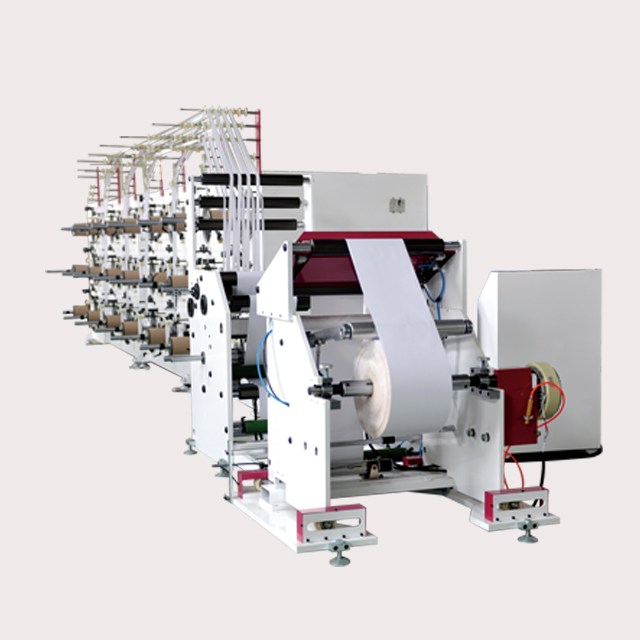
Standard packaging film slitters simply will not suffice for these inherent material vulnerabilities. Instead, a dedicated EVA foam tape slitting machine is engineered with highly specific tension isolation mechanisms. These systems are designed exclusively to preserve the material thickness and functional properties.
Standard machines rely on basic open-loop tension systems that cannot detect micro-fluctuations. In contrast, specialized equipment utilizes closed-loop systems equipped with precision load cells and low-friction pneumatic brakes. These load cells constantly measure the exact tension across the web. They feed data back to a Programmable Logic Controller. The controller makes millisecond adjustments to maintain the absolute minimum tension required to transport the web forward. This effectively eliminates longitudinal stretching before it starts.
Radial pressure builds exponentially as a roll grows in diameter. If the rewind tension remains constant from the core to the outside diameter, the outer layers act like a tourniquet. They will crush the inner layers of the tape. To prevent this catastrophic failure, advanced machines employ taper tension profiles. As the roll diameter increases, the machine automatically and proportionally decreases the winding tension. This ensures the structural integrity of the layers closest to the core remains completely uncompromised.
In traditional film winding, a heavy lay-on roller presses directly against the rewinding roll to expel trapped air. For delicate cellular structures, this direct pressure is disastrous. Purpose-built machines feature gap winding technology. The lay-on roller is pneumatically held at a precise, micro-adjustable distance from the surface. Furthermore, utilizing ultra-lightweight carbon fiber rollers with counter-pneumatic pressure applies only a feather-light touch. This removes boundary air without crushing the cells.
For converters handling long production runs, traditional single-roll rewinding is often economically unviable. When high-capacity output is required for industrial clients, a center surface spool winder becomes an indispensable asset on the production floor. Modern configurations, such as the HH300I series, can handle 24 to 48 shafts simultaneously, drastically multiplying throughput.
A spooling system operates by traversing the slit tape back and forth across a much wider cylindrical core. It operates on the exact same mechanical principle as thread winding onto a sewing spool. It drives the roll using a dual-method approach. Torque is applied from the center shaft, while a controlled surface roller dictates the web speed and air entrapment. This dual-drive system provides ultimate control over large, heavy rolls of highly compressible material.
To clearly illustrate the engineering advantages, consider the operational differences between the two primary winding methods:
Operational Feature | Traditional Pancake Rewinding | Traverse Spooling Center Surface |
|---|---|---|
Radial Pressure | High. Layers stack directly vertically, creating immense downward force. | Low. Lateral distribution dissipates pressure across a wide core. |
Continuous Length | Severely limited by roll diameter stability. | Extremely high. Packs thousands of meters onto a single stable spool. |
Adhesive Oozing Risk | High risk due to concentrated edge friction and vertical pressure. | Virtually eliminated. Edges do not stack directly on top of each other. |
End-User Efficiency | Requires frequent machine stops for roll changeovers. | Ideal for automated robotic dispensing with minimal downtime. |
If you are evaluating the market to upgrade your converting line, identifying the correct mechanical features is critical. Investing in the right foam tape rewinding equipment secures a high return on investment and ensures operational reliability.
The cutting process itself can deform the substrate before it even reaches the rewind shaft. Imagine trying to slice a soft sponge with a dull knife. Crush cutting does exactly this, pressing the material against a hardened anvil roller and permanently flattening the edges. Conversely, high-quality machines offer rotary shear slitting or razor slitting in the air. Rotary shear uses a top and bottom circular blade to create a clean, scissor-like cut that severs the cells perfectly without downward compression.
Master webs often suffer from slight thickness variations across their width. If you rewind multiple slit rolls onto a standard solid air shaft, thicker rolls will wind tighter, while thinner rolls will wind looser. Differential rewind shafts utilize independent friction rings that slip at varying rates. This vital engineering feature compensates for material thickness variations. It ensures every individual slit roll on the shaft winds with the exact same predetermined tension.
Edge Position Control systems are mandatory for thick materials. These ultrasonic sensors detect the edge of the moving web and automatically shift the unwind stand to keep the material perfectly aligned. This ensures the thick substrate enters the slitting knives perfectly straight. It prevents lateral stretching, uneven cut widths, and binding against the blades.
Even when armed with state-of-the-art machinery, operator technique dictates the final yield. Implementing strict Standard Operating Procedures ensures consistent quality across different production batches.
Calibrate Load Cells and Sensors: Before running a new density, operators must zero and calibrate the tension load cells. Running a lightweight one millimeter substrate requires entirely different baseline parameters than a dense five millimeter structural tape.
Optimize the Blade Angle and Depth: Ensure slitting blades are razor-sharp. For rotary shear, the overspeed ratio of the bottom anvil to the web speed must be precise. The blade tangent must be set to slice cleanly without plowing the material forward.
Program the Taper Tension Profile: Set an aggressive taper tension profile in the controller. A tension reduction of twenty-five to forty percent from the core to the final diameter is often necessary to protect the inner layers from radial crushing.
Monitor the Initial Startup: Never start a machine at full production speed. Run the first fifty meters at a crawl and physically inspect the start of the rewind rolls. Look for signs of longitudinal stretching or thickness reduction before ramping up to operational speeds.
Variables like ambient temperature swings, varying adhesive viscosities, or slight density changes can throw a wrench into production. Understanding how to address these defects using advanced machine capabilities is essential for any process engineer.
If the tape is narrower at the end of the roll than the beginning, it is a classic symptom of linear stretching. As the roll diameter increases, the torque required to turn the rewind shaft changes. If the rewind tension is set too high, the machine pulls the delicate web too aggressively. The solution is to immediately lower the overall rewind tension threshold. Next, implement a steeper taper tension curve to prevent the outer layers from stretching.
Telescoping occurs when the roll lacks internal stability. This usually happens because the tension is too low, resulting in a loose wind. It can also happen if the lay-on roller pressure is insufficient to bleed out entrapped air between the layers. To fix this, slightly increase the baseline taper tension to provide a firmer foundation on the core. If spooling, carefully adjust the tracking speed and pitch to lock the layers in place securely.
Edge defects prior to winding are almost entirely related to the slitting section. Dull slitting knives, incorrect blade side-load pressure, or an improper shear angle will tear the cellular structure rather than slicing it cleanly. Transition immediately to rotary shear or razor slitting. Replace dull blades and verify the shear angle according to the manufacturer specifications.
Investing in bottom-of-funnel converting equipment requires partnering with an original equipment manufacturer that inherently understands complex nuances. Standard film-slitter manufacturers often lack the engineering background required for this specific niche.
No two manufacturing facilities have the exact same requirements. The density, width, adhesive tackiness, and final application will dictate the mechanical requirements of the machine. Ensure the manufacturer can customize the machinery to your specific demands. For example, treating lay-on rollers with specific plasma coatings to match the chemistry of your exposed adhesives is often necessary.
Furthermore, never purchase converting equipment based solely on a specification sheet. A reputable machinery builder will require you to send sample rolls to their facility for a Factory Acceptance Test. They should conduct live test trials and provide you with the finished rolls for inspection. Validation proves the machine can perform flawlessly before any financial commitment is finalized.
Rewinding without flattening the material is a delicate balance of material science and advanced mechanical engineering. Generic machines often crush the cellular structure, leading to rejected batches and wasted capital. By investing in a purpose-built setup equipped with traverse winding capabilities, manufacturers can completely eliminate material crushing and roll deformation. Upgrading your equipment protects the quality of your product and dramatically increases production efficiency. It opens doors to high-volume industrial clients who demand perfectly wound, continuous-length tapes.
If your production line is suffering from crushed materials or inefficient roll changeovers, it is time to evaluate your winding technology. Discover high-performance, customizable converting solutions tailored to your exact specifications by exploring the advanced machinery options at https://hhmmach.com today.
Rotary shear slitting and razor slitting are definitively the best methods for processing compressible materials. Rotary shear slitting operates much like a pair of high-precision scissors, utilizing a top and bottom circular blade to slice cleanly through the cellular structure. Razor slitting uses industrial blades positioned at a precise tangent to cleanly separate the web. Both methods slice through the substrate without exerting downward compression. Conversely, crush slitting should be strictly avoided, as it inherently compresses the material at the cut line.
Traverse winding distributes the slit tape back and forth across a much wider core. In standard pancake winding, every single layer of tape is stacked directly on top of the previous layer. This creates immense cumulative radial pressure that leads to crushed inner layers and severe adhesive oozing. Traverse winding mitigates this by ensuring the edges do not stack directly on top of one another. Furthermore, it allows converters to wind significantly longer continuous lengths onto a single roll.
While some standard film slitters can be retrofitted with differential friction shafts or upgraded tension controllers, these modifications are generally insufficient for high-quality converting. Standard machines lack the ultra-low tension capabilities required to transport elastic materials without stretching them. They also lack specialized controls like gap winding technology. For consistent, high-yield production without material deformation, investing in a purpose-built machine is highly recommended.
Taper tension is an automated winding algorithm programmed into the machine logic controller. As the rewind roll grows in diameter, the machine gradually and systematically decreases the pulling tension. If constant tension were applied, the outer layers of the roll would act like a tightening rubber band, squeezing inward with immense force. This cumulative pressure would crush the cellular structure of the inner layers. By utilizing an aggressive taper tension profile, the outer layers are wound gently.
Adhesive blocking is the direct result of excessive mechanical pressure and friction-induced heat. To stop it, operators must first reduce the overall rewind tension and implement a steeper taper tension curve to prevent the roll from squeezing itself. Secondly, utilize gap winding capabilities to ensure the lay-on roller hovers just fractions of a millimeter above the web. Finally, ensure your slitting blades are razor-sharp to prevent friction heat during the cut.
The maximum operational speed depends heavily on the material density and thickness gauge. While rigid films can run at upwards of four hundred meters per minute, delicate cellular structures typically require slower speeds to maintain tension stability. High-end specialized machines can comfortably run between fifty and one hundred and fifty meters per minute without causing longitudinal stretching. Pushing beyond the material specific threshold will inevitably result in necking and edge distortion.
Material density directly dictates the required torque and tension settings. A high-density structural substrate is more rigid and can withstand higher linear pull forces without stretching. Conversely, a low-density, highly porous substrate acts like a soft sponge. It requires ultra-low tension settings and highly sensitive load cell feedback to prevent immediate elongation. Operators must recalibrate the closed-loop tension system every time a different density is loaded onto the unwind stand.
