
Views: 0 Author: Site Editor Publish Time: 2026-10-18 Origin: Site
Using the wrong machinery ruins expensive raw materials. Stretched films, sticky tape jams, and dusty paper edges cost facilities thousands in wasted production time. Scrapped rolls eat directly into your profit margins. A slitter rewinder must match your specific substrate perfectly. Otherwise, you face operational bottlenecks and constant maintenance downtime. In this comprehensive guide, you will learn exactly how to make the right equipment choice. We will explore how to match mechanical configurations to the unique behaviors of tape, film, and paper. This ensures your production line runs flawlessly from the first unwind to the final cut.
Material Dictates the Machine: The physical properties of your substrate determine the exact mechanical configuration you need. Sticky, highly elastic, or thick and abrasive materials all require entirely different handling mechanisms.
Blade Selection is Crucial: Razor slitting is optimal for delicate films. Rotary shear slitting is mandatory for heavy paper. Score slitting works best for specific adhesive tapes.
Tension Control Prevents Waste: Advanced closed-loop tension control stops material from stretching. This avoids warped printed graphics and guarantees uniform rewinding profiles.
Dedicated Systems Outperform Universal Ones: While versatile machines exist, dedicated equipment engineered for a specific material offers higher operational speeds and significantly lower scrap rates.
Before evaluating specific substrates, engineers must understand the fundamental mechanics of the equipment. A high-performance slitting rewinding machine is a critical piece of converting equipment. It is designed to process large master rolls into narrower, manageable widths suitable for end-use packaging or further manufacturing.
Unwinding: The converting process begins at the unwind stand where operators load the heavy master roll. Modern machines utilize edge position control or line position control systems. Optical or ultrasonic sensors detect the edge of the traveling web and automatically adjust the unwind stand laterally. This precision ensures the material feeds into the machine perfectly straight, drastically minimizing edge trim waste.
The Cutting Section: As the web travels through the machine frame, it passes through the cutting station. Specific blade configurations separate the wide web into multiple narrower strips. The exact type of blade deployed here depends entirely on the material's physical properties and thickness.
Rewinding: The final stage involves spooling the newly cut strips onto smaller cardboard or plastic cores. This section must maintain flawless tension. If the tension is too tight, the pulling force will stretch the material or crush the inner core. Conversely, if the tension is too loose, the finished rolls suffer from telescoping and structural instability.
Investing in converting machinery requires a highly analytical approach based on real-world production data. The converting industry is currently undergoing a massive shift towards sustainability. Manufacturers are increasingly adopting ultra-thin, biodegradable films and recycled kraft papers to reduce packaging weight and meet strict environmental mandates. These eco-friendly substrates are notoriously difficult to process. They are far more sensitive to tension fluctuations and mechanical stress than traditional virgin plastics.
Consequently, modern converting facilities are abandoning older, universal equipment. To remain competitive amidst rising raw material costs, plant managers are investing heavily in precision tension control and material-specific blade setups. The primary goal is keeping scrap rates below one percent.
Imagine an operator trying to process 12-micron polyethylene film on a machine calibrated for thick kraft paper. The web will almost certainly snap or stretch beyond recognition within seconds. Using inappropriate slitting technology leads to measurable financial losses. For abrasive materials like paper, using the wrong blade type results in rapid blade wear. This generates excessive paper dust and forces frequent machine downtime for blade replacements.
When evaluating a new machine, technical buyers must analyze three primary material variables:
Thickness in Microns or Mils: This dictates the required cutting force and blade type. Thicker materials require robust shear blades. Ultra-thin webs demand razor-sharp precision.
Tensile Strength and Elasticity: This determines the complexity of the tension control system. High elasticity requires closed-loop load cells to prevent elongation during high-speed runs.
Surface Friction: This influences roller surface treatments. Sticky or high-friction materials require Teflon-coated or knurled rollers to prevent the web from jamming against the machine frame.
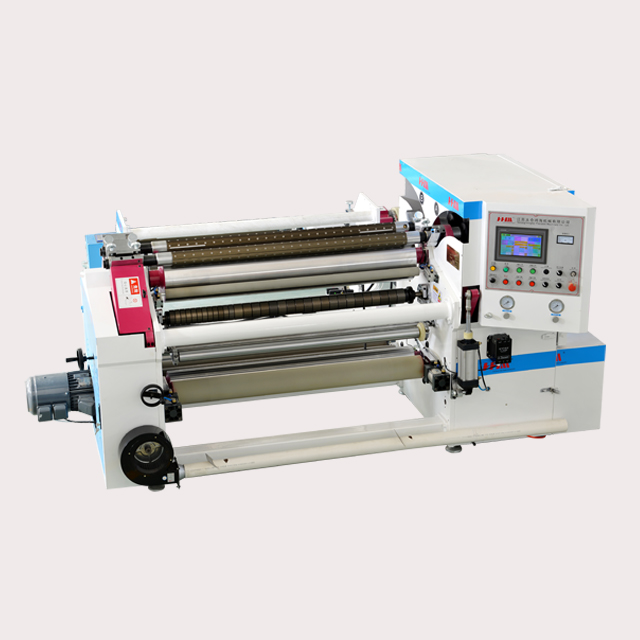
Processing adhesive materials introduces unique mechanical challenges that standard converting machines simply cannot handle. A dedicated tape slitting machine is engineered specifically to manage the sticky, viscous nature of these substrates. This specialized engineering prevents catastrophic web jams and ruined batches.
Materials such as packaging tape, masking tape, and double-sided adhesives present a persistent risk of sticking to internal machine components. During a high-speed production run, adhesive can bleed from the cut edges. It accumulates on blades and idler rollers. This sticky buildup causes the web to grip the rollers improperly. The result is uneven tension, jagged cut edges, and severe machine jams.
To process adhesives efficiently and profitably, the machinery must incorporate targeted technical features:
Non-Stick Rollers: The idler rollers guiding the web must be treated with non-stick coatings like Teflon or plasma-treated silicone. Specialized knurled textures are also used to minimize the physical contact area with the adhesive side of the tape.
Score Slitting or Crush Cutting: For many industrial tapes, score slitting is the preferred method. A dull circular blade is pressed pneumatically against a hardened steel anvil roller. This crushing action separates the tape while simultaneously sealing the adhesive edge. It effectively prevents sticky bleed-out.
Differential Friction Shafts: Adhesive coating thickness often varies slightly across a single master roll. Rewinding on standard solid shafts leads to uneven roll profiles. Differential friction shafts allow each individual slit roll to slip independently. This maintains uniform tension across all rolls regardless of minor thickness variations.
Flexible packaging materials require highly sensitive handling. When evaluating a film slitting machine, your primary focus must be on tension management and static elimination. These features preserve the structural integrity and visual appeal of the plastic.
Plastic films like polyethylene, polyethylene terephthalate, and stretch films are highly susceptible to deformation. If the mechanical pulling force exceeds the film yield strength, the material will stretch. This causes irreversible wrinkling and severely warps any printed graphics. Furthermore, the high-speed unwinding of synthetic plastics generates significant static electricity. This static acts like a magnet for factory dust and causes the film to cling to machine frames, completely ruining the final roll structure.
A professional converting system engineered for films addresses these vulnerabilities directly through precise automation:
Razor Slitting: Thin plastic films are best processed using razor slitting. This method uses stationary razor blades positioned either in the air or within grooved rollers. It provides a exceptionally clean cut without stretching the delicate edges of the web.
Closed-Loop Tension Control: Reliable film slitters, similar to advanced center surface slitting models, utilize a closed-loop system. Load cells continuously measure the actual tension of the web. They feed this data back to a programmable logic controller. The controller then micro-adjusts the servo motors in real-time, holding tension perfectly constant even at speeds exceeding 400 meters per minute.
Active Static Eliminators: Industrial-grade static elimination bars must be installed just before the rewinding section. These neutralize electrical charges, ensuring safe operation and perfectly flush roll profiles.
Paper converting is fundamentally different from film or tape processing. It demands brute mechanical strength alongside precise particulate management. A heavy-duty paper slitting machine relies on robust engineering to tackle massive master rolls without faltering under the load.
Materials like kraft paper, thermal paper, and heavy cardboard lack elasticity. When cut, paper fibers break and release fine dust particles into the air. If this dust is not actively managed, it contaminates the machine bearings, blinds optical edge sensors, and degrades the quality of the finished product. Additionally, jumbo paper rolls are exceptionally heavy. They generate massive kinetic energy during unwinding that can easily destabilize a lightweight machine frame.
To process commercial paper efficiently, heavy-duty mechanics are absolutely non-negotiable:
Rotary Shear Slitting: This mechanism functions exactly like a pair of industrial scissors. It utilizes two circular blades overlapping slightly. As they rotate, they shear the thick paper cleanly. This minimizes dust generation and prevents the blunt-force tearing associated with razor blades.
Heavy-Duty Frame Construction: Because paper rolls can weigh several tons, the machine frame must be constructed from thick, vibration-dampening cast iron or solid steel. This rigid construction ensures the shear blades remain perfectly aligned at high operating speeds.
Integrated Dust Extraction: High-quality paper slitters are equipped with vacuum-based trim removal and dust extraction systems. These are positioned directly at the slitting station to capture particulates before they settle on the web.
To simplify your purchasing decision, use this quick-reference matrix to match your primary material to the required machine specifications. Choosing the right combination drastically reduces daily waste.
Substrate Type | Ideal Blade System | Recommended Rewind Shaft | Critical Machine Feature |
|---|---|---|---|
Delicate Plastic Films | Razor Slitting | Differential Friction Shaft | Closed-Loop Load Cell Tension |
Adhesive Tapes | Score / Crush Cutting | Differential Friction Shaft | Teflon-Coated Non-Stick Rollers |
Heavy Kraft Paper | Rotary Shear Slitting | Pneumatic Air Shaft | Vacuum Dust Extraction System |
Buyers often confuse slitting equipment with basic rewinding equipment. Understanding this technical distinction is vital for proper capital allocation and avoiding factory production bottlenecks.
A simple rewinding machine is designed to transfer material from one roll to another without altering its overall width. It is typically used to inspect printed material for defects, change the inner core size, or correct the tension of a poorly wound roll.
In contrast, a slitter rewinder is an active manufacturing tool. It takes a single wide master roll, physically divides it into multiple smaller strips via a dedicated cutting station, and rewinds those individual strips onto separate cores simultaneously.
Evaluate your production requirements objectively. If your goal is only to break down a large roll of stretch film into smaller lengths for warehouse hand-wrapping, a simple rewinder is sufficient. However, if your factory receives 1300mm wide master rolls from a supplier and needs to supply 200mm wide rolls to a printing press, a full slitting rewinding line is absolutely mandatory.
When comparing equipment from different manufacturers, subjective marketing claims should be ignored. Focus entirely on hard technical specifications tailored to your daily factory operations.
The physical capacity of the machine must comfortably exceed your maximum material dimensions. Verify the maximum unwinding width, such as 1300mm or 1600mm, and the maximum unwinding diameter. A machine unable to accommodate the diameter of your master rolls will force you to purchase pre-processed, smaller rolls. This defeats the cost-saving purpose of bringing converting operations in-house.
Mechanical speed directly dictates your production output. Industrial models often range from 200 to over 500 meters per minute. However, sustained operational speed is far more critical than theoretical maximums. For high-volume facilities, automation features such as automatic knife positioning, laser core alignment, and automatic roll unloading significantly reduce setup time between jobs. This drastically improves your overall equipment effectiveness.
The rewinding shaft technology is one of the most critical decision points for an engineer. Standard air shafts expand uniformly via air pressure to grip cores. They are cost-effective and highly suitable for materials with a perfectly uniform thickness, like standard printing paper. Conversely, differential friction shafts feature individual friction rings that slip independently based on localized tension. For adhesive tapes, flexible films, and multi-layer laminates where thickness varies slightly across the web, friction shafts are strongly recommended to prevent loose or telescoped rolls.
Yes, highly versatile machines exist that can handle multiple material types. However, they require interchangeable modular components. Operators must be able to swap razor blade cassettes for rotary shear modules and manually adjust the tension control parameters via the control panel. While universal machines offer flexibility for diverse operations, dedicated machines engineered for a single material type typically operate at much higher speeds with greater efficiency and lower maintenance requirements.
These are the three primary cutting mechanisms in the converting industry. Razor slitting uses a stationary blade slicing through the web, making it ideal for thin, delicate plastic films. Shear slitting utilizes two rotating circular blades that overlap like scissors, making it the standard for abrasive materials like paper and foil. Score slitting involves a dull blade pressing the material against a hardened steel cylinder, which is highly effective for adhesive tapes and non-woven fabrics.
Capital investment varies significantly based on the machine width, operational speed, and level of automation. Basic manual models designed for narrow webs and low-speed operations require a lower initial investment. Conversely, fully automated lines featuring closed-loop tension control, differential friction shafts, automatic knife positioning, and robotic roll unloading represent a higher capital expenditure. Yet, they offer substantial long-term savings in labor and drastically reduced material waste for high-volume factories.
Telescoping, where the layers of the roll slide sideways like a spyglass, and wrinkling are almost always symptoms of improper tension control or uneven master roll thickness. If the rewinding tension is too loose, the roll lacks structural integrity. If it is too tight, the material may stretch and deform. Upgrading to differential friction shafts and ensuring your machine utilizes a closed-loop load cell system will typically resolve these structural defects permanently.
Operating speeds depend heavily on the material and machine build. Standard machines process materials at roughly 200 to 300 meters per minute. High-end, servo-driven industrial models processing stable films or papers can comfortably exceed 500 to 800 meters per minute. However, pushing a machine to its maximum speed without proper tension control will inevitably result in web breaks and ruined rolls.
Preventative maintenance is the key to longevity. Operators should implement a strict daily cleaning schedule to remove adhesive residue and paper dust from rollers and optical sensors. Blades must be inspected weekly and replaced at the first sign of dulling to prevent jagged cuts. Furthermore, routine lubrication of the drive gears and periodic calibration of the load cells ensure the tension control system remains perfectly accurate over years of heavy use.
Choosing the right converting equipment is the absolute foundation of your production efficiency. Matching the correct blade types, tension control systems, and roller designs to your specific substrates drastically reduces daily waste and prevents frustrating machine jams. Whether you are processing delicate films, sticky adhesives, or heavy paper, a precise, purpose-built machine ensures perfect rolls for your customers every single time. To explore equipment engineered specifically for your material and to view detailed machine specifications, visit https://hhmmach.com and connect with our engineering team to find your exact match.
